
 Yahoo Autos
How to Kill a Car
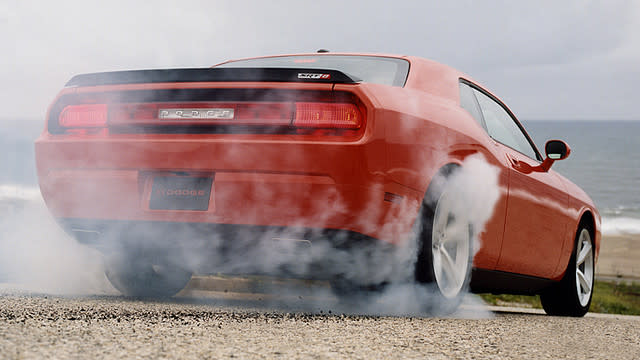
What does it take to kill a car? Many of you can come up with ways of your own, but let’s look at some of the most common forms of abuse that cause vehicle failure.
NEGLECTING SCHEDULED MAINTENANCE
More cars find their way to the junkyard by neglecting basic scheduled maintenance than any other cause. This list includes such things as neglecting oil changes and transmission services, driving too long on the same set of sparkplugs, ignoring check engine lights and charging system or temperature gauges that indicate trouble, turning a deaf ear to brake squeals, belt squeals, clanking, banging, and clunking.
MORE FROM AMERICASCARSHOW.COM
Think about this: Airlines have aggressive maintenance checks on their planes based on how many hours they have been in the air. Ocean liners and submarines keep a full-time maintenance crew on hand at all times to attend to mechanical problems as they crop up. Race teams have a pit crew on hand during the race to ensure the vehicle continues to deliver peak performance safely throughout the event.
What makes those of us who drive a car every day think we are immune to mechanical breakdown? And what makes us think that we can drive our vehicles indefinitely without regular maintenance? Our cars need maintenance checks to ensure that they run safely and efficiently. There are an untold number of accidents that occur as a result of mechanical problems that were caused by neglect of basic maintenance issues. And there are many more cases of massive and unnecessary repair costs for the same reason.
A lot of people think that if the car runs, why spend money on it? If there’s no obvious problem, wait until there is and then fix it. If you think like this, you are being pennywise and pound-foolish. In your lifetime you are spending far more money on cars than the guy who does what it takes to maintain a healthy car. Compare it to the physical health of your body. In the past, people used to go to a doctor only when they were sick. Today we know that preventative care has improved the quality of life as well as extended the length of life. And it costs less money! Insurance companies want to pay for yearly checkups because problems can be diagnosed early before they cost an arm and a leg to treat. Cars are no different. Follow the suggested maintenance schedule for your vehicle and you will get longevity, peak performance, and efficient operation out of your chariot.
OVERLOADING TOWING AND HAULING CAPACITY
Have you ever followed a car towing a small boat trailer that’s loaded with a very large boat? Picture it. A large boat is hanging over a trailer on all sides and towering over the tow vehicle; the trailer’s tires are flattened, and the vehicle’s front end is pointing upward. It’s a mess looking for a place to explode, and this is not an uncommon sight. Talk about a safety issue. Not only are the people in the tow vehicle at high risk, but so are the motorists who share the same roadway space.
Vehicles come from the factory with a specific towing capacity. Some vehicles come made with a towing package that is designed for safe towing. Check your owner’s manual or call your manufacturer’s customer service department to find out the towing capacity of your particular vehicle.
What happens when you pull a trailer that’s too heavy for your vehicle? Engine damage from overheating, undue stress to the frame, damage to the suspension and braking systems, and transmission damage from overheating.
Overheating

Vehicles designed for heavy towing that have a towing package from the factory come with a high coolant capacity radiator and sometimes a heavier water pump. When hauling a heavy load on a trailer with a vehicle that is not designed to haul such a load, the engine heats up far beyond the ability of the radiator to cool it down. The result is overheating, blown head gaskets, and cracked or warped cylinder heads. This is not to say that you should never tow a trailer with your vehicle, just find out what the towing capacity is and do not exceed it. On vehicles that tow heavy loads regularly, it’s a good idea to add an auxiliary engine oil cooler to ensure the engine oil in the crankcase is thoroughly cooled, because intense heat causes the oil to break down and lose viscosity.
Undue Stress to the Frame
Vehicles with high towing capacities generally have strong frames that allow for hanging the additional weight of a trailer in them. When hauling a trailer that is too heavy with a vehicle not designed to haul such weight, the frame buckles and damage to the structural integrity of the vehicle is incurred.
Suspension Damage
The suspension is designed to handle the weight of the vehicle plus the specified maximum trailer-towing weight. That’s it. Overload the vehicle and suspension problems occur. Leaf and coil springs or torsion bars are overtaxed and either break or wear out prematurely. U-bolts and shackles that hold leaf-spring-packs together break, coil springs crack or snap in two, and torsion bars break free from their securing brackets in the vehicle’s frame.
Brake Damage
Brakes are overtaxed when a vehicle that is loaded beyond capacity has to stop. Most small trailers do not have brakes of their own, so the brake system of the towing vehicle bears the burden of the entire load. The additional stress on the brakes causes the friction material to overheat and harden or crystallize, rendering it ineffective and unable to stop the vehicle. This condition causes “brake fade.” When you press down on the brake pedal, no friction material wear occurs because the crystallized friction material is too hard to wear away when it comes in contact with the rotors or drums. The brake shoes or pads just ineffectively slide against the rotor or drum surface like locomotive brakes (steel on steel) and make lots of noise, but there’s no stopping power. Overheating the braking system also increases the temperature of the brake fluid to the point where it cooks the rubber seals and the entire system is compromised.
Transmission Overheating and Damage
An excessive load causes the transmission to overheat, which causes the transmission fluid to reach temperatures that compromise the soft internal parts such as rubber seals and clutches. The heat hardens the rubber seals, causing loss of internal hydraulic pressure. In addition, the glue that secures the clutch friction material to the steel backings hardens and clutch strength is compromised. If you’re going to haul a trailer, install an auxiliary transmission oil cooler.
THE NEUTRAL DROP
A Neutral Drop is when you rev the engine high in neutral and, at the peak of revving, you drop the transmission into low gear. In the case of a car equipped with a manual transmission, you dump the clutch in first gear after revving the engine high. This action causes the tires to squeal as you speed off the line. The problem with this practice is that it puts excessive stress on the drivetrain components. Driveshafts break or bend, universal or CV joints snap, differentials are damaged, axles twist and break or strip out, transmissions break internally, and clutches burn out. In short, it’s a high price to pay just to experience a little tire squealing. Not good.
INSTALLING A PLOW ON A VEHICLE THAT CAN’T HANDLE ONE
This kind of vehicle abuse often occurs in parts of the country that get a lot of snow. In recent years plow makers have come out with what they call “personal plows” for regular-duty vehicles such as small or mid-sized SUVs. Usually these plows are made of lightweight materials such as Plexiglas, aluminum, or a synthetic material that the maker claims will not overtax the vehicle. So what’s the problem? Although these types of plows are not too heavy for the vehicle, they are intended for light use. The problem is that people tend to overwork them.
Often a driver will plow so hard into a snow bank that the air bag deploys. In addition, although the driver is not aware of it, the vehicle also sustains frame, suspension, steering linkage, and some body damage that can be attributed directly to the plow installation.
In this scenario, let’s say this guy gets away with using the personal plow for a couple of years. During year three he notices a high-pitched whine coming from the transmission; then it quits altogether. He takes it to the shop. The diagnosis? The transmission is burned up due to excessive plow use. What happened? The transmission in his light-duty truck was not intended to push several hundred pounds of snow and ice around. It gave up the ghost after just three years of plow work. The damage was a result of the hard impacts of the plow into snow banks, ice, and other obstructions hiding under the snow. Had he installed the plow in a vehicle capable of handling it, there would have been no damage.
ROCKING THE VEHICLE OUT OF SNOW OR MUD
Ever get stuck in snow or mud? Rather than calling a tow truck, what’s the first thing we do? We rock the vehicle back and forth, switching from forward to reverse while gunning the engine. This action often causes the vehicle to gain enough momentum to get the vehicle out of the rut. It often works, but at what expense? The stress on the transmission and drivetrain can cause internal hard parts (case hardened gears and sprockets) to break under the pressure. CV joints, universal joints, and splined parts such as axles can twist and break apart. Save yourself some money -- dig out or get towed.
DRIVING WITH THE TEMPERATURE GAUGE ON HOT OR THE LIGHT ILLUMINATED

You’re driving on a country road out in the middle of nowhere when you notice that your temperature gauge is buried in the “hot” zone. Rather than stop and call a tow truck, you keep driving, hoping you can make it to a repair shop. The engine overheats, coolant spews out of the overflow tank, and the engine gets so hot it stalls. You have to call a tow truck anyway. The shop tells you your engine’s got a blown head gasket and cracked cylinder head. The cause? A $12 thermostat. The repair would have cost you $12 plus the cost of installation and coolant and the cost of a tow job (unless you have AAA or the equivalent). Instead you end up with an $800 repair bill because you were too stubborn to call a tow truck. Many a good vehicle has been undone because of this mistake.
DRIVING WITH LOW OR NO OIL IN THE ENGINE
While driving at highway speed the oil light comes on. You either don’t see it or choose to ignore it. Sometimes an engine noise (usually a “knock”) can be heard when the light comes on. You hear the knock but choose to turn up the radio (don’t laugh; people actually do this). All of a sudden the engine starts to lose power and it eventually stalls, leaving you stranded on the roadside. You call a tow truck and the vehicle is towed to a repair shop. The diagnosis: The engine has seized because there was no oil in the system and you have to replace it.
How can this scenario be avoided? Stop at the first sign of low oil, whether it’s the low oil pressure gauge, a lit oil light, or a knocking sound. Often major damage can be averted if the engine is shut off in time. Sadly most people choose to ignore the warning signs.
IGNORING AUTOMATIC TRANSMISSION WARNING SIGNS
The warning signs that something is wrong with your automatic transmission are quite distinct. Whining, dropping out of gear, and banging into gear all fall under this category. If you observe any of these symptoms, stop driving and check the fluid levels. Driving an automatic transmission on low fluid results in greater friction and more heat. The longer the transmission is driven in this condition, the more likely irreversible damage will occur. Remember, heat hardens the rubber seals and crystallizes the clutch glue, compromising the system. When you first notice any of these symptoms, check the fluid and proceed with diagnostics before driving any farther to avoid costly repairs and down time.
OVERSHOOTING A TURN AND HITTING A CURB IN THE SNOW
When you drive too fast on snow-covered roads, your vehicle slides rather than tracks through the snow. This action can cause frame, suspension, and steering damage if it occurs while trying to make a turn. For example, let’s say you are approaching an intersection and realize at the last minute that you have to make a left-hand turn. Because your vehicle is going too fast, it slides as it turns and slams into the curb on the right side of the cross street. Overshooting a curb in the snow is a common occurrence, costing anywhere from hundreds to even thousands of dollars in repairs.
As you can see, there’s a lot of vehicle abuse that can be avoided. Use common sense, know your car, observe changes in sounds, vibrations, warning lights, and other detectable variations, and don’t ignore possible problems or put off getting them diagnosed. Your car is a major item on your family’s budget. You can’t control the price of cars, or the cost of car insurance, or the cost of gas, but you can control how much you spend to maintain your car, and how long it lasts, and how safe your family is when they ride in it. Take charge in these areas where you have control and you’ll always have a reliable and safe vehicle that performs well and lasts long enough to make you feel like you got your money’s worth.
ADDITIONAL DRIVING TECHNIQUES TO AVOID TO MAKE YOUR CAR LAST FOREVER
Feathering the Clutch
Have you ever seen someone in the car next to you on a hill, revving the engine and causing the car to lunge forward then hit the brakes, only to watch the car creep backward and the whole process starts again? I guarantee you that this driver is “feathering the clutch.” What they’re doing is equalizing the clutch halfway engaged and gunning the engine in an effort to make the car stay put on a hill. This practice results in a failed clutch in short order every time. By partially applying the clutch and racing the engine, you burn clutch disc material off the disc, rendering it useless and costing you hundreds or over a thousand dollars in repairs, depending on the damage done. It’s best to learn how to start a stopped car on a hill with a clutch rather than this idiotic move.
Power Braking
When power braking, one foot is held on the brake while the other foot floors the gas pedal. When the light turns green, the driver releases the brake and the car races off at a high rate of acceleration. The problem with this practice is that engine and transmission mounts are taxed and over time break. If there already is a broken engine mount, the engine could lift up and chock the throttle linkage open, resulting in uncontrolled acceleration. In addition, internal automatic transmission parts can fracture and break, brakes wear out when the tires break loose against the applied brakes, and transmission and oil cooler lines become stressed and break, causing a massive fluid leak and potentially doing internal engine or transmission damage. And these are just a few problems that could crop up.
Drafting

Some people think they’re NASCAR’s Tony Stewart on the roadways, drafting semis and other vehicles while driving on the highways. Not only is this dangerous if the vehicle in front of you has to make a quick stop, it’s also expensive in terms of paint work. Think about it: All the stones and projectiles on the roadway rolled over by the leading vehicle gets kicked up onto your vehicle’s body, paint, and windshield. Think about the paint and body damage, not to mention glass damage you are setting yourself up to experience. Slow down, Tony. It’s safer and cheaper…
Pulling a Fishtail
The other day I was waiting at a stoplight and heard the most annoying noise you can imagine. This guy was driving a small pickup truck, and he gunned it as he turned the corner. It was on a wet road surface so the rear wheels spun and the rear end of the truck fishtailed with him smiling behind the wheel as he lumbered down the highway (sped off would not be an accurate statement because the truck had a small four-cylinder engine in it). What happened if the truck spun out in that crowded intersection? What kind of damage would he have done to his truck and the other cars? If there was snow on the ground and he had hit a curb that was hiding under that snow, he would have pulverized the suspension and drivetrain (not to mention the wheel and axle damage he could have sustained). I have seen vehicular undercarriages literallydestroyed from this type of abuse. Bad practice, stay away from it.
Well, that does it from me. Till next time, keep rollin’!
DRIVERS ASK, TOM ANSWERS: VEHICULAR ABUSE PROBLEMS SOLVED

Q: My sister and I have a difference of opinion regarding the practice of rocking the car out of a snow bank when stuck. She says it doesn’t hurt the car at all and is a cheaper option than calling a tow truck. I say if you can’t dig it out, call a tow truck because you do damage to the transmission and engine. Who is right?
Michelle — Buffalo, New York
A: Michelle,
In short, you are right, period. Rocking the car out of a snow bank can result in all kinds of transmission and drivetrain havoc. And yes, the engine can get damaged if it gets overheated or over-revved. I have seen twisted axles and driveshafts, vaporized transmissions and transfer cases, damaged viscous couplers, damaged undercarriages, broken suspension components, bent wheels, blown differentials, torn gas and brake lines, broken motor mounts, bent frames, and other mechanical carnage as a result of this abusive practice. Not a good practice. Tell sis to cease and desist or suffer the eventual consequences.
Q: The other day I street raced my Honda Accord. When I launched off the line from neutral, I heard what sounded like nuts and bolts in a blender. Now it doesn’t move at all. The car is an automatic. What did I do to my car?
Carlos — Los Angeles
A: Carlos,
You probably destroyed the transmission when you “launched” off the line. What happens is when you do a neutral drop into gear while revving the engine at high speed, the transmission gets shocked beyond belief. Hard parts inside the transmission get fractured or break. In your case, it sounds like you broke some hard parts like a drum, planetary gear set, ring and pinion, carrier, or something along those lines. Get it into a shop to drop the pan and see what kind of metal is in the pan. You will probably end up replacing the transmission because of extensive internal damage. Sorry.
Q: I own a Toyota RAV4 with a 2.4-liter four-cylinder engine. I put a hitch on it to tow my 22-foot boat last year, and the truck just kept overheating. What can I do to stop this? Will it damage my SUV? It seems to me that it should be able to tow a silly boat, don’t you think?
Sal — New Mexico
A: Sal,
Your truck could tow a trailer that weighs about 1,500 pounds. Anything over 3,000 pounds requires its own braking system and a heavy-duty vehicle set up for towing. You did not give me the particulars of the boat, so I had to do a little homework. On average, a 21- to 24-foot Searay sports boat weighs anywhere from 3,000 to 5,000 pounds, depending on how it's equipped. The cabin cruisers are even heavier. Sal, at this towing weight, you are 1,500 to 3,500 or more pounds overweight. This is a recipe for disaster. You will damage the frame, destroy the brakes, and overheat the engine and transmission to the point of meltdown, not to mention the safety risk you pose to yourself and others while towing said boat. Sal, get another truck or sell the boat. Don’t tow it anymore with this vehicle. It’s dangerous and will destroy the vehicle.
Q: I just bought a small SUV; it’s a Kia Sorento. I have a small house with a small driveway that needs to be plowed during the winter months. I have been shopping for one of those personal snowplows for my SUV. This would work perfectly on my driveway. What make personal snowplow do you recommend I buy?
Tammy — Burlington, Vermont
A: Tammy,
I recommend you not buy a snowplow. This vehicle is not equipped for snowplow use. You will find that out the first time you plow hard into an ice and snow bank. The air bags will probably blow, and if they don’t, over time you will do damage to the frame, suspension, drivetrain, and body. Not to mention the possibility of voiding your new car warranty. Forget the plow and call a plowing service Tammy. You’ll be glad you did.
Q: My father suggested I write you because he listens to your national radio show on XM radio. I own a 1982 Ford F-150 pickup truck with four-wheel drive. I put 311050R17 tires on the rear and 21570R15 tires on the front. This made it look jacked up. It drove fine until I put it in four-wheel drive. The truck acted like the brakes were on, and it came to a stop. Now when I put it in four-wheel drive I just hear grinding and it doesn’t move. What happened?
Josh — Pineville, North Carolina
A: Josh,
You destroyed the transfer case. This vehicle is equipped with part-time 4WD. This means that when the vehicle is shifted into four-wheel drive, all four wheels are locked together and turning at the same rate of speed. The transfer case has no way of differentiating between the two tire sizes and the different rpm they turn at. When you put the truck in four-wheel drive with the tires turning at different speeds, the transfer case gears bound up against each other and eventually failed internally. It’s no wonder the truck acted like the brakes were on. The transfer case was twisted and binding up internally. Sorry to be the bringer of bad news, but you probably have to replace the transfer case. Next time, make sure all four tires installed on the truck are the same size.
This excerpt from How to Make Your Car Last Forever was republished with permission from Motorbooks (Quayside Publishing Group). All rights reserved.
